Monday, 20 April 2015

Centurions- Frank Lloyd Wright: Falling on Water


Frank Lloyd Wright often described his own work as “organic”, this is not to suggest all materials used in the manufacturing of the build are naturally sources and unaltered by human tampering. But his Architecture is formed through abstraction inspired solely by the surrounding environment.  In my opinion Wright takes consideration to reflection in each architectural development he carries forward. His designs regularly reflect characteristics of the surrounding land, not in a literal sense but his abstraction lends itself to imitate the surroundings. For example, Falling Water, one of his more recognised pieces, this particular design incorporates stones to replicate that of those derived from the surrounding area, including the incorporation of the waterfall itself- not only complimenting the architecture but allowing the architecture to become a part of the nature.
No house should ever be on a hill or on anything. It should be of the hill. Belonging to it. Hill and house should live together each the happier for the other.

I feel that this technique coined by Wright is a vital consideration in any Architects work, abstraction in the rarest of forms is a bold statement, the uncommon shapes and colour schemes often work well to produce inspiring architecture. Yet arguably, many areas have such natural beauty about them that the abstract link with the natural world is not just a comfortably balance but a pivotal one that creates astounding work.  

Friday, 17 April 2015

Garden cities of to-morrow - Ebenezer Howard


Back in 1898 a man named Ebenezer Howard proposed a written piece about reforming London into a labyrinth of Garden Cities, bringing the outside pleasantries of the countryside into the high population, over built corporate Jungle of our Capital.

Hyde Park
parks and gardens, orchards and woods, are being planted in the midst of the busy life of the people, so that they may be enjoyed in the fullest measure; homes are being erected for those who have long lived in slums; work is found for the workless, land for the landless, and opportunities for the expenditure of long pent-up energy are presenting themselves at every turn.”
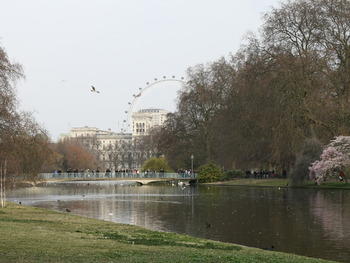
St James's Park


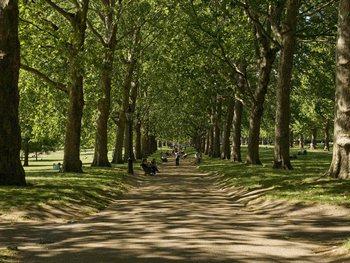
The city since has been reformed with areas such as Green Park, Hyde Park and St James’. The proposals to keep these parks as landmarks rather than furthering construction works to allow a stress free, relaxing area from the constantly stress and pressure of business life in a city centre, not to mention an aesthetic and historical memorabilia of England’s traditional landscapes.
The reformation of London from the initial proposal has created a world renowned city which beyond its high profitability margins, mass employment and endless nights with 24 hour development and lifestyle, now has a welcoming contrast to allow individuals to pause from their busy lives and soak in the natural environment, even in the busiest of areas. The juxtaposition within this works not only for aesthetic effect but obviously works with the user in mind. The pleasant contrast allows the user a breath of fresh air, most literally.

Green Park


Garden cities of to-morrow - Ebenezer Howard 

Architecture and narrative: the formation of space and cultural meaning in buildings - Sophia Psarra c2009

Barcelona Pavilion Mies - WikiArquitectura (54).JPG
The Pavilion exemplified the characteristics of the free plan with the asymmetrical arrangement of the walls and the roof contrasting the regularity of the structural system (Bonta 1979: 140). Zevi regarded it as an exemplar of decomposition, a practice established by de Stijl that analysed the building volume into individual planes (Zevi 1948: 35).10 It is a mechanism that broke away from the box, as well as from the co-ordination of the composition through geometrical symmetry. While Classicism had favoured a fixed viewing point, Modernism, as exemplified by Gropius and Mies, replaced a privileged point with multiple viewing positions (Zevi 1948: 33).

Barcelona Pavilion Mies - WikiArquitectura (60).JPG
In a recent visit to Barcelona I was fortunate enough to experience the Pavilion. The space appeared simplistic in style, minimalist in aesthetics, yet, my exploration of the space took two hours and I still feel I didn't absorb all of which Mies van der Rohe had created.

The materials alone resembled those of a modern fashion. Steel framework with glass façades. Yet, the marble sub divider suggested more localised, cultural experience amongst the otherwise suggested ‘universalised’ modern space.  A design far superior to its times.

 Arguably the materials used assuredly cost a large sum. The steel framework for such a small single storey building is arguably an excessively lavish design feature, the onyx dorée, one of the rarer, highly sought of the marble family and the large glass front encasing the space with a grand, open plan design.

 Yet with these features unified it creates a contemporary design with unquestioned symmetry due to the high grade of the polished materials producing a unique
optical experience fusing early modernism and classicism.


From my experience of the Pavilion the modernism derived from the geometric symmetry is a conceptual design consideration which most definitely would benefit my own work with the singular re-examination of costs, one which is more client specific depending on each individual project.
Pabellon Piscina1.jpg


Architecture and narrative: the formation of space and cultural meaning in buildings - Sophia Psarra c2009

Friday, 6 March 2015

Architecture/Building Studies/ Building Department: Bauhaus 1919-1933: Weimar-Dessau-Berlin


“It was a truly experimental structure: a living experiment with individual rooms, minimised like ship’s cabins to make more room for a central living room; a technological experiment with light, pre-cast concrete blocks made of industrial waste products; an ecological experiment with thermal zoning of the rooms and minimised exterior surfaces and window openings to the south-west as well as insulation materials made of peat to provide for better heat insulation; finally, a social experiment intended to lighten the load of the occupier by using easy-care materials for floors, windows, doors and wet areas as well as the most modern household technology.”


Siebenbrodt, Michael, and Schöbe, Lutz. Temptis : Bauhaus. New York, NY, USA: Parkstone International, 2012. ProQuest ebrary. Web. 5 March 2015.

Regarding Gropius’ design style, the use of reclaimed materials, efficient insulation and manipulating internal design to suit the needs of the user, i.e. easy maintenance materials to adapt to their living styles, is especially relevant in today’s society. We live within a consumerist society, using and wasting, often not utilising the most from materials and not recycling as much as we use. Applying these key factors into his Architectural design helps reduce the negative environmental impact, whilst simultaneously creating a design to meet the exact needs of the modern day user, easy maintenance for a fast paced lifestyle and minimal waste in return lowering costs as well. Gropius’ design conscious is extremely relevant and a consideration I especially want to consider within my design developments.

A more modern day Architect who yields the same passion for efficient design is Gary Chang. Gary Chang developed a 24-room home within 32sq meters. Applying large interventions and manoeuvrable walls within the living space to create a comfortably inhabitable and adaptable space.

In regards to modern day production, the considerations of Gropius around the 1920’s is even more so applicable to today’s demand for new structures with our growing society, Gropius realised the need for mass production, therefore he focused on the unity of form and function. He developed designs, which were simplistic in design but in a way to be manufactured utilising the most of the materials used, minimising waste or excessive material use. This is exceedingly prevalent in today’s design world as the growing demand needs to be addressed more efficiently as time progresses to prevent an overwhelming reduction in available resources.


The Urn and the Chamberpot: Adolf Loos 1900-30 Colquhoun, Alan. Oxford History of Art: Modern architecture


A key theory within Adolf Loos concept of Architecture encapsulates the concept of the 'Tomb' and the 'Monument', terminology coined by Loos himself. According to Loos, the Tomb is the recognition of culture and memory of which, whilst the Monument critiques contemporary design, creating a forefront for modern developments. 
Loos believes that Art is not intrinsic within Architectural concepts, he believes form should be reflective of function and that in turn should develop it's own Architectural façade, whereas Art should be utilised merely for decoration, segregating the two components.  

Loos argues that function should be the driving force for design concepts and that excluding art from the process is design itself. The primary need of the space is the aesthetic, modern design Architects such as Muthesius fails to consider in the search for imminent design progressions, which as a result impacted the course of Architectural design.  Supported further by the quote
“modern style already exists within industrial design without artistic pretensions.”

“Art could now survive in only two (absolutely antithetical) forms: firstly as the free creation of works of art that no longer had any social responsibility and were therefore able to project ideas into the future and criticize contemporary society; and secondly in the design of buildings which embodied the collective memory”

Arguably it can be said that the incorporation of Art within Architecture prohibits the potential for ‘Industrial Design’ solely focused upon how the function

 Reflects upon the form. Whereas many would conclude that utilising each separately limits the potential within Architecture and the creativity which truly creates the drastic leaps in the Architectural design world that we see today.
Personally, I feel I can apply Loos precedent in the developmental stages of my work to achieve the most from the practicality of my design concepts. I also feel the application of Art within design allows the others to be inspired and designers to create a unique world in which we live in. It allows designers to  integrating cultures, Artistic movements and colour into the world we live, it allows us to show personal expression and the uniqueness of each individual Architect.

Modern Architecture. Oxford, GBR: Oxford University Press, 2002. ProQuest ebrary. Web. 6 March 2015.
Copyright © 2002. Oxford University Press. All rights reserved.